
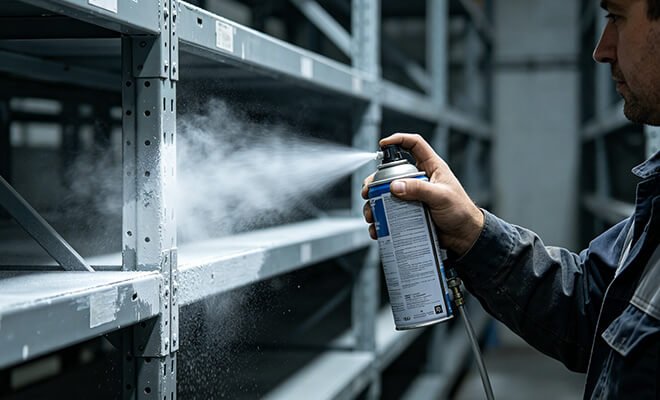
Aerosol spray paint is widely used in automotive refinishing, industrial coating, household renovation, furniture restoration and DIY projects. While easy to use, most users frequently encounter technical issues such as poor adhesion, paint runs, uneven finishes, nozzle clogging and fast fading. These problems are the top searched questions on Google from DIY users, contractors and wholesale buyers.
Based on aerosol formulation principles and 15 years of manufacturing experience, we have sorted out the 12 most high-traffic spray paint FAQs with accurate, industry-standard causes and solutions to help users achieve smooth, long-lasting coating results.
1. Why Does Spray Paint Peel or Lose Adhesion?
Poor adhesion and peeling are the most common spray paint complaints. They are rarely caused by product quality but by improper surface preparation.
Main causes:
1.The surface contains dust, oil, wax, moisture or rust residue
2.Smooth glossy surfaces without sanding treatment
3.Spraying on incompatible materials
4.Construction in humid or low-temperature environments
Professional solution: Clean and degrease the surface completely before spraying. For glossy metal and plastic surfaces, use fine sandpaper for matte treatment to increase friction. Avoid painting on wet or frozen surfaces. For high-hardness surfaces, use primer spray paint to enhance adhesion.
2. Why Does Spray Paint Drip or Run Down?
Paint runs and drips occur when wet paint cannot support its own weight, which is a typical spraying technique error.
Causes: Spraying too close, moving too slowly, applying one overly thick layer, or over-spraying in one spot.
Correct method: Keep a stable distance of 15–25 cm from the surface. Use the standard technique of thin coats with multiple passes instead of one thick coat. Move the can steadily without pausing. If dripping appears, stop spraying immediately, wait for full drying, sand the uneven area smooth, and re-spray lightly.
3. Why Does Spray Paint Have an Orange Peel Texture?
Orange peel finish refers to uneven grainy surfaces, which greatly affects flatness and gloss.
4. Why Does the Nozzle Clog or Spray Unevenly?
Touch dry: 30–60 minutes
Clean dirt and grease completely, sand glossy surfaces to matte finish, and confirm the old paint is firm without peeling. Do not mix oil-based and water-based paint systems randomly, which will cause chemical incompatibility, blistering and peeling.
8. Is It Safe to Use Spray Paint Indoors?
Spray paint contains volatile solvents, so closed indoor use is not recommended. If indoor operation is necessary, keep full cross ventilation, open doors and windows, and wear protective masks. Avoid spraying near high-temperature equipment, open flames and electrical sources.
For household interior projects, choose low-odor, quick-drying formulas to reduce residual smell.
9. How Long Is Spray Paint Shelf Life? Can Expired Paint Be Used?
Unopened (proper storage): 3 years (cool, dry, away from sunlight and heat sources). Production and expiry dates are marked on the can.
Opened: best used within 6–12 months.
Expired paint will have solvent loss, pigment precipitation, poor atomization, color deviation and weak adhesion. It is not recommended for formal coating projects.
10. Why Does Spray Paint Bubble After Drying?
Bubbles are caused by trapped moisture, volatile gas or excessive single-layer thickness.
Key reasons: wet base surface, humid construction environment, one-time thick spraying, or residual oil contamination.
Solution: Ensure the base surface is dry and clean. Adopt thin multi-layer spraying. For bubbled paint film, polish and repair after full curing.
11. How Many Coats of Spray Paint Do I Need?
For most renovation projects, 2–3 thin coats create uniform color, full coverage and stable adhesion. One single thick coat always causes defects such as dripping, bubbling and incomplete curing.
12. How to Store Aerosol Spray Paint Safely?
Store upright in cool, dry and ventilated areas
Avoid direct sunlight, high temperature and fire sources
Prevent impact, extrusion and puncture of pressure cans
Avoid freezing environments to maintain stable fluidity
Final Summary
More than 90% of spray paint failures are caused by incorrect surface treatment, improper spraying techniques and unsuitable construction environments, rather than product quality problems. Standard operation, reasonable recoating intervals and correct storage can ensure flat, uniform, scratch-resistant and long-lasting paint finishes.
As a professional aerosol spray paint manufacturer, we provide high-coverage, quick-drying, high-adhesion spray paint for automotive, industrial, household and DIY scenarios, supporting OEM customization, stable batch quality and full export certification.